Showing posts with label Asian Specialties. Show all posts

Sunday, April 11, 2021

Oven Fried Rice


I had an interesting conversation with my son the other day about his disappointment with making Fried Rice. He was really wanting the Rice to be a bit more crispy. I told him that traditionally you have to use a wok on very high heat to get the Rice crisp and that using a nonstick frying pan just wasn't going to give you that result. I told him that we should try making Fried Rice in the oven as that's one way of adding that extra heat that an electric stove can't give you. We finally made it today and you can see our results - mine is the photo above with Peas and his is the one with Egg below. Both have bits of Ham and Green Onion and were seasoned the Rice with Salt, Pepper and a little GF Tamari. We cooked them on two different sheet pans. He was delighted with the results because cooking the Rice mixture on a baking sheet gave him a lot more of the crispy bits!

So here are the important things to remember about cooking Rice this way - first, make sure you use leftover Rice that has been stored at least a few hours (preferably overnight) in the refrigerator as this dries the Rice out and assists in making it crispy. If you forgot to store your cooked Rice and have to make some fresh to use, you can still use it, but I would cook the Rice for longer and you will have more chewy bits. Secondly, cook the Rice in the oven first by itself, before adding the other ingredients or they will get too dried out. I cooked the Rice, then I added the Green Onions, chopped Ham and Peas. Finally, add the GF Tamari (or Soy Sauce) at the end so that there isn't a burnt flavor and you can add the Eggs at this point too. If you want to spice it up, it's better to add some Chili Sauce when you eat it. Remember that Fried Rice has always been about using up leftover Rice, Meat and Vegetables to create a new meal, so feel free to get creative about what you add. Just make sure that the ingredients are not too wet or you will take away the crispness of the Fried Rice made this way. It's definitely a new way of making Fried Rice and it is delicious!


Oven Fried Rice

3 - 4 cups leftover, cold, cooked Rice

3 - 4 Green Onions, trimmed and minced

½ cup minced, cooked Meat of your choice (Ham is most traditional)

1/3 cup frozen Peas

1 -  2 lightly scrambled Eggs

3 Tablespoons Vegetable Oil

1 - 2 Tablespoons Tamari or Soy Sauce

Salt and Pepper to taste


Heat the oven to 475 degrees.  


Pour 2 Tablespoons of the Oil over a large sheet pan. Place the Rice on top and sprinkle with Salt and Pepper. Toss to coat with a spatula. Put the sheet pan in the oven and cook for 10 minutes.  


Remove the pan from the oven and turn the Rice over. Sprinkle with more Salt and Pepper and the additional Tablespoon of Oil. Add in the Green Onions, Meat and Peas. Return to the oven and cook for an additional 10 minutes.  


Remove the pan from the oven and toss the Rice mixture again and add in the Egg pieces cutting them into smaller pieces with the Spatula. Sprinkle with the Tamari and toss to coat. Return to the oven for an additional 4 - 5 minutes.  Serve immediately.

Five Element Analysis

Rice (since it is White) is considered a Metal grain. The Tamari and Egg and Ham contribute the Water Element. The Green Onions add a little bit of the Wood Element, but they also contribute the Metal Element. The Peas bring in more of the Wood Element. The Fire Element is only found in the Black Pepper and the Earth Element is missing. So serve this dish with some Hot Tea for the Fire Element and be sure to serve an Earthy food to go with it to create a Five Element balance. I served it with a Cucumber Salad as that added in more Earth and the Vinegar contributed some more Wood. 

Friday, May 8, 2020

Chicken Wings with Vietnamese Flavors


Like everyone else sheltering at home, I am getting food delivered from several of my favorite, local grocery stores. I let them substitute things if they can't find exactly what I've asked for and that has given me some unexpected products. Today, I got Chicken Wings instead of Chicken Thighs, but I'm not complaining because I really like them and I don't make them often enough. i decided to glaze them by making a rift on Vietnamese Caramel Sauce spiked with Lime Juice and they were absolutely delicious!

For those of you who don't know, Vietnamese Caramel Sauce is of course made with Sugar that is melted to a golden brown, but it also has Fish Sauce added to it. This ingredients smells pretty strong and a bit funky to if you are not used to it, but it tastes delicious. I use the Red Boat brand because it's a bit smoother and mellower. But all Fish Sauces are salty and deeply savory, so the Lime Juice gives that tart and tangy punch that makes the sauce taste so good. And I cooked Garlic and Shallot bits in the sauce too.

I cooked the Chicken Wings as I always do, broiled in the oven. Because I got a mix of the both the little meaty Drumettes and the bonier middle section of the Chicken Wings all cut up, I cooked them for slightly longer - 12 minutes on the first side and 10 minutes on the other. If you just have the middle section, you only need to cook them for about 9 - 10 minutes per side. Then you just toss them broiled Chicken Wings in the sauce and serve them with lots of Rice and a vegetablek and you have a perfect meal!

Chicken Wings with Vietnamese Flavors

2 pounds Chicken Wings
1/3 cup Sugar
1 Tablespoon Water
1/4 cup Fish Sauce
2 large Garlic Cloves, minced
1/3 - 1/2 cup minced Shallots
1/8 teaspoon Black Pepper
2 Tablespoons fresh squeezed Lime Juice

Heat the oven to broil. Place the Chicken Wings on a foil lined baking sheet with a wire rack on top. Place in the broiler and cook for 12 minutes. Remove from the oven and using tongs, turn the Chicken Wings over. Return to the oven and cook for an additional 10 minutes. 

Put the Sugar and Water together in a high sided saute pan and stir to combine. Cook on medium heat until the Sugar turns syrupy and light golden brown. Add in the Fish Sauce, carefully and slowly and then the Garlic and Shallots. Stir to combine and continue to cook for 1-1/2 - 2 minutes. Sprinkle in the Black Pepper and Lime Juice and stir to blend. 

When the Chicken Wings are done, place in a bowl and drizzle the Caramel Sauce over them. Toss to coat and serve immediately.

Five Element Analysis

Chicken belongs to the Wood Element and the Lime Juice adds even more. Broiling is a Fire method of cooking and the Black Pepper brings in a tiny bit more. Sugar is always associated with the Earth Element and the Garlic and Onions contribute the Metal Element. The Water Element is found in the Fish Sauce. Who knew? This method of cooking Chicken Wings makes it a pretty balanced dish all by itself!

Friday, June 29, 2018

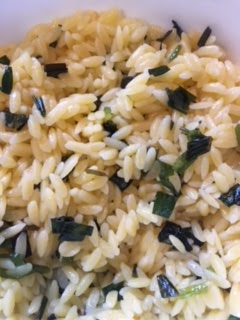
Scallion Oil Orzo


I marinated some Chicken Thighs in a homemade Teriyaki Sauce for two days and was getting ready to cook them when I decided I wanted something different as a side. Normally I make Rice, but tonight I was in the mood for something different. So, I made Orzo and dressed it in a classic Chinese Sauce - Scallion Oil. This condiment is usually made by browning Scallions (or Green Onions) in Oil and saving the Oil to use for any number of dishes. But for the Orzo, I cooked a lot of Scallions in a little bit of Oil until they just started to brown and get crispy and added some Sesame Oil for extra flavor. I stirred it into the cooked Orzo and it was so delicious! It's a simple side but full of flavor, yet it didn't compete with the Teriyaki Chicken. This is now going to be a regular side for me!

Scallion Oil Orzo

2 cups Orzo (I used DeLallo Gluten Free)
Salted Boiling Water
1 cup of Scallion (Green Onion) pieces (use the green part only)
3 Tablespoons Vegetable Oil (I used Safflower)
1 Tablespoon Sesame Oil
1/2 teaspoon Salt

Cook Orzo in Salted Boiling Water until al dente and drain.

Meanwhile, heat the Vegetable Oil in a small frying pan. Add the Scallions and cook over medium heat until the edges of are beginning to brown. Add in the Salt and Sesame OIl.  

When the Orzo is done, stir in the Scallions and the Oil, stir to combine.

Five Element Analysis

The Gluten Free Pasta is made of Corn, which is part of the Earth Element and Rice Flour, which belongs to the Metal Element. and the Scallions add even more. Finally, the Sesame Oil adds in a bit of the Water Element. So serve with some Water, Wood and Fire foods to create a balanced meal. I served it with Teriyaki Chicken, which is a Wood meat marinated in Tamari, which brings in more of the Water Element. I also cooked some Gailan, more of the Wood Element and served Strawberries, from the Fire Element for dessert.   

Tuesday, August 22, 2017

Summer Sesame Noodles with Chicken


Summer is salad season and every day I think of a new and different salad. I got inspired to make Sesame Noodles as to me, it's a quintessential dish for a hot day. If you make it ahead and chill it in the refrigerator, it becomes a refreshing lunch full of flavor and different textures. I make it with Gluten Free Spaghetti (Schar Bonte D'Italia) and I'm pleased to say that it turned out perfectly. But if you chill it too long, you need to warm it up a bit or the noodles get a little stiff. Sesame Noodles are so delicious. I've made a similar recipe on this blog before using Peanut Butter but I really like Sesame version better. In fact, I use Tahini rather than an Asian brand because I like how creamy it is. Tahini needs a bit more seasoning and you can make it as spicy as you like by adding more Chili flakes but I like it mild. I like my salads to be my main dish so I add Chicken, but it is just as good without.  I loved this salad so much that I will definitely be making it again soon!

Summer Sesame Noodles with Chicken

1 Chicken Breast half, poached or roasted (Rotisserie Chicken leftovers work well) 
1 package Spaghetti Noodles (I used Schar Bonte D'Italia brand)
1/2 cup Tahini
4 Tablespoons Hot Water
1/4 cup Tamari or Soy Sauce 
1 Tablespoon toasted Sesame Oil
1 Tablespoon neutral tasting Vegetable Oil
1/2 teaspoon Salt (omit if using Soy Sauce)
1 Tablespoon Sugar
2 Tablespoons Rice Vinegar
2 teaspoons or more Chili Garlic Sauce, Chili Oil or Chili Flakes
3 large Garlic Cloves minced
1 large Carrot, trimmed, peeled and cut into julienne pieces
1 Cucumber, 
3 Tablespoons minced Scallion
Optional:  2 Tablespoons toasted Sesame Seeds

Shred the chicken and put aside. Then cook the Spaghetti according to package directions in boiling salted water, drain. While Pasta is cooking, mix the sauce. In the serving bowl, combine the Tahini with the Hot Water and stir until thinned out and blended. Add in the Tamari, Salt, Sugar, Vinegar, Garlic and Chili Sauce. Mix to blend. Toss with cooked, drained Spaghetti and the Carrot and Cucumber.  Sprinkle with the Scallion pieces and the Sesame Seeds. Cool in the refrigerator for about 15 - 30 minutes.


Five Element Analysis

Tahini, which is made from Sesame Seeds is part of the Water Element and the Tamari adds even more.The Vinegar and Chicken contribute the Wood Element. The Chili Garlic Sauce brings in a bit of Fireand the Carrot and Cucumber make sure that the Earth Element is represented. Finally, the Scallion and Garlic bring add the Metal Element. All elements are present but the Fire Element needs a bit of support so serve this Sesame Noodle Salad with Tea to create a Five Element balance.


Tuesday, July 18, 2017

Tamari and Honey Glazed Salmon and Simple Rice Pilaf


Lucky me - my sons went fishing in Alaska and brought back some amazing King Salmon, Sockeye Salmon and Halibut and my freezer is stocked with fish!  I'm especially happy because I rarely buy King Salmon as it is so expensive and I love it. I'm sharing an Asian glaze that I use to bake and/or broil Salmon (any kind) and it just highlights the Salmon so well. I bake it in aluminum foil so that the flesh of the fish soaks up some of the sauce first and then open up the packet, turn the Salmon over and brush it with a bit more glaze and broil it to get a caramelized top. You can of course skip this step and make it easier for yourself by putting the Salmon in the foil skin side down and opening up the packet to finsih it by broiling it The thicker the piece of Salmon, the longer you have to cook it. When I serve it, I sprinkle the Salmon with Sesame Seeds. I love to serve this preparation of Salmon with Rice Pilaf, which cooks in about the same amount of time as the Salmon and a green vegetable, usually steamed. For me, it's one of those perfect dinners!  

Tamari and Honey Glaze

1/2 cup Tamari
1/3 cup Honey
3 Tablespoons Shaoshing Rice Wine or Mirin (Japanese Rice Wine)
pinch of White Pepper (can also use Black)

In a small frying pan, heat the Tamari, Honey, Rice Wine and White Pepper until the Honey is fully incorporated. Pour into a small bowl and let cool slightly.

For Salmon

1 to 1 1/2 pounds of Salmon filets
1 Tablespoon Vegetable Oil (I used Safflower)
Tamari and Honey Glaze
1 Tablespoon toasted Sesame Seeds

Heat the oven to 400 degree   Place a large piece of Aluminum foil on a baking sheet and cover with 1 Tablespoon Oil. Place the Salmon skin side up on the foil and pull up all the sides of the foil. Pour 1/2 of the Tamari and Honey Glaze over the fish. Or, place the Salmon in the foil skin side down and pour the glaze over. Seal the foil and place in the oven to bake for 15 - 20 minutes for a thick piece of Salmon. For a thinner piece, it will take only about 10 - 12 minutes.

Take the Salmon out of the oven and turn the oven to broil. Open the foil packet very carefully and pull the foil away from the fish. Remove the fish from the foil packet and place the Salmon directly onto the baking tray with a large spatula, this time with the skin side down. Or, just open the packet if you have placed the Salmon skin side down.  

Brush the top of the Salmon with the remaining glaze and place into the broiler for about 5 - 7 minutes to caramelize the glaze, being careful not to burn it. Remove from the oven and sprinkle with Sesame Seeds. Lay over a bed of Simple Rice Pilaf to serve.

Simple Rice Pilaf

2 Tablespoons Salted Butter
1 Shallot, minced
2 cups Basmati Rice
3 1/3 cups Chicken Broth 

In a small pot, melt the Butter and add in the Shallots. Cook, stirring until you can smell their fragrance and add in the Rice. Cook until the Rice becomes a bit opaque and add in the Chicken Broth  Bring to a boil and cover.  Turn the heat down to a simmer and cook for 20 minutes. Remove from the heat, fluff with a fork and put the cover back on for 5 minutes.


Five Element Analysis

Salmon belongs to the Water Element and the Tamari and Sesame Seeds add even more.  The Wood Element is represented but the Chicken Broth in the Rice and the Green Vegetable you serve. The Fire Element is present just a little bit in the Rice Wine and White Pepper. The Honey contributes the Earth Element and the Rice, Shallot and Butter add the Metal Element.  Add a dessert made from a Fire fruit would make this a balanced Five Element meal!


Wednesday, May 31, 2017

Spam Musubi


Spam Musubi is one of the gifts of Hawaii. I personally love it even though Spam often gets a bad rap for being salty and fatty. But It's really just chopped canned ham! And you can now buy the low fat/low sodium version. I think my love of Spam comes from my childhood when my Father would bring  it home from the PX (the military exchange store) and my Mom used it to make Fried Rice with it. I still like Spam in my fried rice. Many years later,  Spam Musubi was one of the foods I tasted on my first trip to Hawaii and it became a dish that I made at home often. These days, I often buy it at the SeaTac Airport Waji's on my way somewhere as it travels well. I just returned from a trip and found myself craving it so I made it at home once again today. It is just so satisfying! All you have to do is make some Sushi Rice and then slice the Spam and pan fry it until is browned. Then you add some Mirin (Japanese Rice Wine) and some Tamari to give it some Asian flavor. Then, you place it on top of the Rice (shaped like the Spam pieces) and wrap Nori Seaweed around it. You can buy a Spam Musubi press, but I like to make them by hand.  Believe me, Spam Musubi is delicious!

Spam Musubi

1 12 oz can of Spam Light
1 Tablespoon of Vegetable Oil
3 Tablespoon Mirin or Chinese Shaoshing Rice Wine
2 Tablespoon Tamari
1 cup Japanese Sushi Rice or Japanese Medium Grain Rice
about 1 1/2 cups water
2 sheets of Nori Seaweed cut into 4 pieces each lengthwise
Optional:  Furikake (Seaweed Sprinkle)

Wash the rice in a colander until the water runs clear. Place in a small pot and add enough water to cover the rice by one knuckle of your index finger. Heat on the stove until the water begins to boil. Wait until the water lowers nearly to the level of the Rice, reduce heat and cover. Let cook for 20 minutes and remove from heat.

Remove the Spam from the can. Slice into 8 pieces. Put oil in the frying pan and heat. Place the Spam pieces in the pan and cook until browned on one side. Turn over and brown the other side. Then add in the Mirin and the Tamari. Turn the Spam at least once. Let the liquid evaporate. Remove the pan from the stove.

For assembly, take 1/4 cup of cooked rice and fashion into the shape of the Spam piece with the paddle or your fingers, pressing as tightly as you can. Sprinkle with Furikake if desired. Lay one Spam piece on top. Continue until all the Rice and Spam are used. Then, take the Seaweed and wrap each Musubi with the cut ends on the bottom. Cut off extra Nori if necessary.

Five Element Analysis

As a variation of salted Pork, Spam belongs to the Water Element and the Tamari and Seaweed add just a bit more. The Sushi Rice contributes the Metal Element. The Mirin brings in a tiny bit of the Fire Element, but for balance it would be good to serve this with a Vegetable Salad to bring in the Fire and Wood Elements.


Monday, April 3, 2017

Braised Lotus Root


I bought a great, big multi-sectioned piece of Lotus Root the other day and decided to braise it. Normally, I add it to a big pot of simmering Pork Belly in the last 1/2 hour of cooking time, but last night I decided just to braise it by itself as one of several side dishes. This is a common technique for cooking Lotus Root in many Asian cultures. The Lotus Root is actually it's underwater stem and is crisp and crunchy when raw, used in salads, and become starchier when cooked longer. I like to do a quick braise of Lotus Root that takes about 20 - 30 minutes to preserve some of the crispness of this wonderful vegetable. If you like it softer, just cook it longer and it becomes more like Potatoes. The braising liquid is a simple combination of Tamari, Rice Wine and Chicken or Vegetable Broth and the flavorings are Ginger, Green Onion and Brown Rock Sugar or Brown Sugar. That's it! This is such a delicious vegetable and it is considered very cooling and good for the lungs. That makes it a tasty good for you food!

Braised Lotus Root

2 pounds of fresh Lotus Root
Water for soaking mixed with 2 Tablespoons Vinegar or Lemon Juice
2 cups Chicken or Vegetable Broth
1/2 cup Tamari or Gluten Free Soy Sauce
1/2 cup Shaoshing Rice Wine
1/4 cup Brown Rock Sugar or Brown Sugar
3 - 4 Green Onions, trimmed and cut into 2 inch long pieces (reserve a Tablespoon of the top pieces, cut up, for garnish
3 large slices of Ginger, peeled
Optional:  1 teaspoon Sesame Seeds

Peel the Lotus Root and drop each section into the acidified water. When all the segments are peeled, remove each one and cut into 1/4 inch slices. Cut in half if the slices are very large. Return to the acidified water until ready to use.

In a pot or large high sided frying pan with a lid, mix the Broth, Tamari, Rice Wine and Sugar. Bring to a boil and add in the Green Onions, Ginger and Lotus Root. Add in the Lotus Root and bring back to a boil. Cover and reduce heat to a simmer. Cook for 20 - 30 minutes, basting the top Lotus Root pieces and turning them over about half way through. Turn off and let cool in the braising liquid or refrigerate until ready to eat. The longer it marinates, the darker it will get.  Sprinkle with Green Onion tops and Sesame Seeds to serve.

Five Element Analysis

Lotus Root is considered a cooling food and that's because it is both a Metallic food since it is white and has Water properties since it is grown under water.  The Green Onions and Ginger bring in more of the Metal Element and the Ginger also adds to the Earth Element which is supplemented by the Sugar. The Chicken Broth contributes the Wood Element. The Water Element is present in the Tamari and the Fire Element is brought in by the Rice Wine. This then is a balanced little dish in it's own right!


Tuesday, February 28, 2017

Natalie's Nori Tofu Packets


A number of years ago, my friend Natalie made these delicious Nori Tofu Packets when she was staying with me and I've thought about them ever since.I recently visited her in England and she asked me what I would like her to make and I immediately requested this dish. For me, it embodies the flavors of Japan, which was my childhood home.  And, it was just as good as I remembered!  I watched her make it carefully and came home and made it myself. The only thing I changed from her recipe is that I added some Tamari to the Tofu as I like the savor flavor it imparts and I added a drizzling sauce that incorporates some Chili Garlic Sauce to add some heat. This is a lovely dish for those of you who enjoy tofu!


Natalie’s Nori Tofu Packets

1 package Firm Tofu, drained and crumbled
1 Leek, root end trimmed, dark green part cut off, quartered and sliced thinly
2 carrots, peeled and chopped into small pieces
2 Tablespoons Vegetable Oil
2 Tablespoons Tamari + more for serving
2 Tablespoons Umi Plum Vinegar + more for serving
Nori Seaweed Sheets – 8
Optional:  Chili Garlic Sauce

In a large frying pan, heat the oil and add in the sliced Leek and Carrots pieces. Cook, stirring frequently, until the Leek and Carrot pieces soften. Add in the Tofu and cook for another 2 minutes.  Sprinkle the mixture with the Tamari and Vinegar.  Remove from heat and let cool.

Heat the water in a steamer  Lay one sheet of Nori on a small plate and spoon a heaping 1/4 cup of the Tofu mixture into the center.  Fold in the two sides and then the two ends, turning over so the seam side is down. Repeat until all the packets are made.  Steam on the plate or on a steamer tray covered with parchment, two at a time for 5 minutes each. Serve with additional 1 Tablespoon Tamari and 1 Tablespoon of Vinegar mixed together with 1 – 2 teaspoons of Chili Garlic Sauce to drizzle on top.   

Five Element Analysis


Tofu is a Metal Food and the Leeks add even more. The Carrots contribute the Earth Element and the Umi Plum Vinegar makes sure that the Wood Element is present. Tamari brings in the Water Element along with the Nori Seaweed. Only the Fire Element is missing form the main part of the dish so that’s why it is wise to serve these Nori Tofu Packets with a sauce made with Chili Garlic Sauce to create a balanced Five Element dish.


Thursday, March 24, 2016

Five Element Edamame Salad


I had several bags of Edamame in the freezer left over from Chinese New Year and I'm on a mission to use up all the food in there. So, I decided to make a salad and was determined to put in as many ingredients as I needed to create a Five Element balance in one dish. Luckily, Edamame is full of protein so nothing else was needed to fill me up.  What I did was cook and shell the Edamame and added Mu'Er (Dried Black Fungus), which I have previously talked about as being an amazing blood thinner, along with Red Pepper, Carrot Pieces, Green Onions and Mustard Greens. The dressing was a combination of Seasoned Rice Vinegar, Sesame Oil, Oil, Garlic and Chinese Mustard. This salad was so delicious, very healthful and so beautiful too!

Five Element Edamame Salad

1 heaping cup shelled (and cooked) Edamame (can buy already shelled from Trader Joe's)
1 Red Pepper (or 2 Tomatoes), destemmed, deseeded and cut into a small dice
1 large Carrot, peeled, stem end removed and cut into a small dice
1 handful of Mustard Greens (or Kale), torn into bite size pieces
4 thin Spring Onions (or 2 green onions) cut into small pieces
1/2 cup Mu'er, rehydrated in boiling water for 10 minutes, cut into small pieces
3 Tablespoons Rice Wine Vinegar
2 Tablespoons Toasted Sesame Oil
1 teaspoon Tamari
1 Tablespoon Safflower Oil
1 scant teaspoon Chinese Mustard (can also use Dijon)
1 Garlic Clove, minced
1/2 teaspoon Salt
1/8 teaspoon Fresh Black Pepper

In a small bowl, mix together the Rice Wine Vinegar, Sesame Oil, Safflower Oil, Chinese Mustard, Garlic, Salt and Pepper. 

In a salad bowl, combine the Edamame, Red Pepper, Carrot, Mustard Greens, Spring Onion and Mu'er. Pour on the dressing and toss to coat. Let marinate in the refrigerator for 30 minutes up to several hours before serving.

Five Element Analysis

Well as the recipe name tells you, all Five Elements are present in this salad. The Edamame brings in the Water Element and the Sesame Oil and Tamari add even more.  The Mustard Greens bring in the Wood Element and since they are also a bit pungent, they also contribute a little of the Metal Element too. The Metal Element is further supported but the Spring Onion, Garlic and Mustard.  The Fire Element is brought in by the Red Pepper  and the Carrots contribute the Earth Element making this a perfectly balanced Five Element salad!


Sunday, February 14, 2016

White Kimchi


I think everyone is finally getting the idea about how important fermented foods are for your health. Kimchi is one of those foods that enhance the microbiome of the digestive system. This particular version is made without dried Red Pepper, which makes it much easier for those who have trouble with Spicy foods. White Kimchi is very similar to the Pickled Cabbage of Northern China, where my Grandfather comes from and they too like garlic in their Pickles. It is believed that this method of preserving Cabbage came down the Korean Peninsula where it met their fiery red Chili and became the Kimchi that most people recognize. This style is much milder and I personally think it is even more delicious! It gives you a faint fizz on the tongue when you first eat it and it is wonderfully crunchy, juicy and only mildly salty. I think it is the perfect accompaniment for a meal that is heavy on meat. This is my favorite way to add Probiotics to my diet - naturally!

White Kimchi

4 Tablespoons Kosher Salt
4 cups Water
½ Large Head of a large Napa Cabbage or whole small one, root end cut off, leaves separated

1 Tablespoon Salt
1 Tablespoon Sugar
1 Tablespoon Fish Sauce
4 cups Water
1 Asian Pear, peeled, cored and cut into 1 inch julienned pieces
1 pound Daikon Radishes (as narrow in diameter as possible), stem and root ends cut off, peeled and cut into 1 inch by 1/3 inch pieces
6 Green Onions, ends trimmed, root end removed and cut into 1” lengths
4 Garlic Cloves, peeled and sliced

In a large bowl, mix together the 4 Tablespoons of Salt and the 4 cups of Water and put in the Napa Cabbage leaves. Place a plate on top and something heavy (I used my stone Mortar) to weigh it down to keep the cabbage under the brine.  Let sit in a corner of your kitchen counter for 24 hours.

Then, drain and rinse the Napa Cabbage leaves and cut into 1 inch pieces. In the same large bowl, mix together the Salt, Sugar, Fish Sauce and Water until blended. Add in the Napa Cabbage pieces, the Asian Pear, Daikon, Green Onions and Garlic.  Mix together thoroughly and put the plate back on top of the mixture and press down with your heavy object so that all of the vegetables are in the brine and the brine comes over the top of it all. Let the Kimchi sit at room temperature for another 24 hours.

Take the Kimchi out of the bowl and put into a large jar. Pour in brine to cover completely and toss out the extra. Put in the refrigerator for at least one day before eating. 

Optional ingredients:  Sliced Red Pepper, Slivered Carrot, Jujubes – Dried Chinese Dates, Pine Nuts, Chinese Chives, etc.


Five Element Analysis


Kimchi because it is fermented and therefore considered sour is part of the Wood Element. However, the Napa Cabbage belongs to the Earth Element, the Fish Sauce and Salt contribute the Water Element and the Garlic Cloves, Asian Pear and Green Onions, as well as the Daikon Radish bring in the Fire Element.  The only element that is missing is the Fire Element, usually present in the Red Chili so it would be a good idea to add some Red Pepper or serve this with some other Fiery food or sauce as part of your meal to create a Five Element balance.


Saturday, February 13, 2016

Kalbi - Korean Short Ribs


Korean food has always been one of the few cuisines besides Chinese that my mother like sto eat. She particularly enjoyed going to the restaurants where you grilled your own meat and her personal favorite was Kalbi or Korean Short Ribs. With the Banchan assortment of different little vegetables, such as Spinach (previous post) and Mung Bean Salad along with Kimchi  (previous post) and Rice, she was always happy. I love Korean food too and although there are many good Korean restaurants here in Seattle, I am trying to avoid Soy Sauce in the marinades and dried Shrimp in the Kimchi. So, I mostly make Korean food at home. This recipe is the classic marinade for Kalbi. These Short Ribs are precut at Asian Markets, but if you can't find them, you could also use strips of steak, which make it more like Bulgogi (a previous post). Kalbi is very tender and flavorful and is most often served in LA (where my Mom lives) with lettuce and Gochujang Sauce, which often has wheat in it . I serve my Kalbi with Sriracha instead. It is best cooked on a grill, but I don't have one so I cook it in the broiler and it turns out wonderfully - Korean Short Ribs make a delicious dinner!

Kalbi – Korean Short Ribs

1 ½ pounds Short Ribs (with small Bones and sliced thin)
¼ cup Tamari
1/4 cup Rice Wine
3 Garlic Cloves minced
1 ½ - 2 Tablespoons Sugar, depending on how sweet you like it
2 teaspoons Toasted Sesame Oil
1 inch chunk of Ginger, peeled and chopped fine
5 Scallions, trimmed and chopped
3 Tablespoons Chopped Asian Pear (or Apple)

Mix all marinade ingredients in a large bowl. Then add in the Short Ribs. Massage the marinade into the meat and then put carefully into a large Ziploc Bag with the Marinade.  Place in the refrigerator and marinate for at least two hours and preferably overnight - the longer you marinade it, the more flavorful it is.  

Heat broiler and put on a broiler pan and cook on one side until it is browned and sizzling. Turn over and cook the other side until done.

Serve with Lettuce, Gochujang Sauce if desired or Sriracha, Steamed Rice and Kimchi and other vegetables.

Five Element Analysis

Beef belongs to the Earth Element and the sugar in this recipe adds even more. The Asian Pear along with the Ginger, Scallions and Garlic contribute the Metal Element.  The Tamari and Sesame Oil bring in the Water Element and the Fire Element is represented but the Rice Wine and either the Sriracha or Gochujang Sauce. The Wood Element is missing, which is why this dish should be served with Kimchi and/or Spinach for more of the Wood Element to create a Five Element flavor balance!


Monday, January 25, 2016

Clay Pot Tofu


I saw my Clay Pot sitting on a shelf and decided it needed to be used so I made what it basically a Tofu Stew with it.  What's interesting about Clay Pots is that they are often used at the end of a cooking process so that the different ingredients are stir fried briefly then added together to finish inside the clay pot.  There is something quite wonderful about cooking in these vessels as they gently braise and I think it is a particularly good way to cook something delicate, like tofu.  This is a recipe that my Mother used to make and at the time, I wasn't conscious that it was Vegetarian. The Shitake Mushrooms take the place of meat and there is plenty of protein with the tofu. The Tofu gets infused with the sauce and it is so delicious over rice. Of course, you don't have to use a Clay Pot, you can finish this dish in a wok or frying pan. But Clay Pots are wonderful and I always feel like I am getting a present when I open it up to dish up what's inside!

Clay Pot Tofu

1 package Firm Tofu, drained and cut into 1 inch wide by 1/2 inch pieces and patted dry
1/4 Cup Vegetable Oil
1 Carrot, trimmed, peeled and cut on the diagonal into thin slices
1 Leek, white part only, cut into 1 inch shreds
4 Green Onions, trimmed and cut into 1 inch pieces (slice in half if thick)
1/4 of a small Red Onion, sliced into thin 1 inch shreds
4 slices of Ginger, peeled (about the size of a quarter)
8 dried Shitake Mushrooms rehydrated in hot water for 20 minutes, stem removed and cut into quarters
1/2 cup Vegetable Broth (you can also use Chicken Broth)
3 Tablespoons Tamari
2 Tablespoons Rice Wine
1 teaspoon Sugar
1/2 teaspoon toasted Sesame Oil
1  Tablespoon Cornstarch mixed with 2 Tablespoons Water

Place the Clay Pot on the stove and add the Sauce Ingredients (Vegetable Broth, Tamari, Rice Wine and Sugar) and heat on low.  In a large frying pan, heat the oil and add the Tofu. Cook first on one side until brown and then turn over to brown the other side. Remove the tofu and add to the Clay Pot.  Then add the Carrot, Leek, Green Onions, Red Onion and Mushrooms to the pan. Saute for a few minutes or until you can smell the fragrance and the Onion is translucent. Put into the Clay Pot and stir gently to mix ingredients. Turn the heat to Medium High and bring to a boil. Then reduce heat to low, cover and simmer for 20 minutes. Remove lid and add Cornstarch Mixture, turning heat up until the mixture comes to a boil again. Cook until the Cornstarch is incorporated and the sauce is glazed - about 30 seconds. Serve with Rice

Five Element Analysis

This method of Cooking is considered part of the Earth Element and the Carrots add an Earth ingredient along with the Ginger, which is also partially the Metal Element. The Tofu and the Green Onions, Red Onion and Leeks contribute even more Earth.  The Tamari and Sesame Oil bring in the Water Element  and the Fire Element is represented by the Rice Wine. Only the Wood Element is missing (unless you use Chicken Broth), so be sure to serve this with some green vegetables to create a Five Element balance. 

Tuesday, January 19, 2016

Black and White Gomasio - Japanese Sesame Salt


For all of you who explored Macrobiotic cooking, you will recognize this condiment as it is one of the mainstays of that diet. It's been a long time since I had it and I recently saw it for sale at a health food store and I was inspired to make it again at home. It is really easy to make and so good with rice, especially brown rice.  It's a mixture of Sesame Seeds and Salt and that's it. The ratio varies between 12 parts Sesame to 1 part Salt up to 15 parts Sesame to 1 part Salt. I like my Gomasio a little less salty so I use the 15 to 1 ratio. To make it, you toast the Sesame Seeds and smash them a bit to give the final product a texture that is both soft and crunchy.  I like to mix both Black and White Sesame Seeds together as I think it is more beautiful, although White Sesame Seeds are more traditional.  It's so simple and oh so good for you. Sesame Seeds are considered one of the best foods for the Kidneys and the Black Sesame Seeds in particular are thought to help you grow hair. I would eat them just for that reason, but luckily this little condiment is also delicious!

Black and White Gomasio

3 Tablespoons White Sesame Seeds
2 Tablespoons Black Sesame Seeds
1/2 teaspoon Sea Salt

Heat the Sesame Seeds in a small frying pan and cook until they smell toasted, pushing down with the back of the spatula to smash some of the Sesame Seeds. Then add in Salt and continue to stir until Salt is mixed in. Remove to a bowl and cool and put into an airtight glass jar. Serve over Rice.

Five Element Analysis

This is purely a Water Element Food as Sesame Seeds and Sea Salt all belong to this element.  Rice is Metallic when White and more Earthy when Brown, but clearly this needs to be part of a bigger meal to create a Five Element balance.